


Styling throws and cushions on a sofa looks easy until every item starts competing for attention. The goal is not to match everything perfectly, but to create a clear connection between colours, sizes and textures while keeping the sofa comfortable to use.
A successful arrangement usually has one strong idea: a shared colour, a repeated texture or one patterned piece supported by calmer elements. Here is how to style throws and cushions on a sofa without making it look flat or cluttered.
Start with the sofa itself
Look first at the sofa colour and fabric. A beige linen-look sofa does not need the same accessories as a navy velvet sofa. Also consider the rug, curtains, walls and furniture around it. Your accessories should relate to the whole room.
Keep the palette to two or three main colours
A short palette is easier to control. Start with the sofa, add one secondary colour and, if you want, one smaller contrasting accent. The colours do not need to appear in equal amounts.
For example, an ecru sofa can work with camel, terracotta and a touch of deep green. A grey sofa can be warmed with beige, ochre and black accents.
Tone-on-tone for a calm look
Tone-on-tone means working within one colour family while varying shades. This is ideal for a soft, natural living room. On a beige sofa, mix ecru, sand and camel; on green, combine sage, khaki and forest tones.
When colours stay close, texture becomes especially important.
Soft contrast adds personality
On a neutral sofa, a patterned throw can become the starting point. Pick one or two colours from the throw and repeat them in the cushions. This is often easier than choosing every accessory independently.
Pattern + plain is a reliable combination
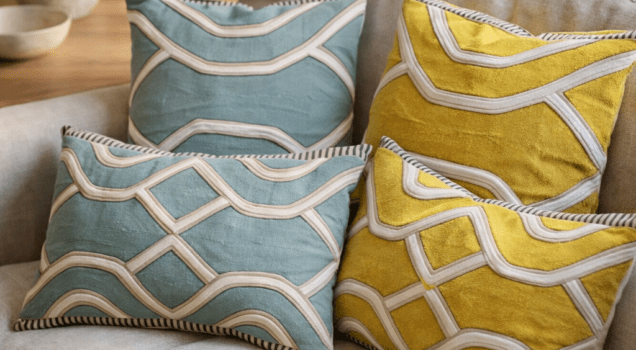
Use one strong pattern and support it with simpler pieces. A checked or striped throw works well with plain or textured cushions. You can also reverse the balance with a plain throw and one embroidered or graphic cushion.
Coordinated sets are a useful starting point
If you are unsure, begin with a throw and cushion from the same collection. They already share a visual language, and you can then add a third piece that is deliberately different.
Kinta and Gastounet are good examples of coordinated families without forcing you into a complete matching set.
-

Kinta fleece-look throw 130 × 160 cm
79.90 € -
Kinta cushion 45 x 45
From 16.90 € -
Gastounet Cotton Throw 140 x 200 cm
209.90 € -
Gastounet cushion
From 44.90 €


Vary cushion sizes
A row of identical cushions can feel rigid. Mix larger squares with a smaller square or rectangular cushion in front. On a three-seater sofa, three to five cushions are usually enough.
- Use two larger cushions as a base.
- Add one or two smaller cushions in front.
- Place the throw on one arm or in one corner.
- Keep enough free space to sit comfortably.
Mix textures more than colours
Texture creates depth without making the palette busy. Cotton, velvet, embroidery, marl, fringes and heavier weaves can all work together if the colours remain related.
A beige sofa with one smooth cushion, one embroidered cushion and a marl throw can look layered even with only two colours.
How should you place the throw?
On the arm
Fold it loosely over the arm for an easy, practical look.
In one corner
A softer placement with cushions immediately creates a cosy effect.
Across the back
This can introduce a larger area of colour or texture and visually change the sofa.
On a chaise section
Let the throw stay more open and relaxed so it remains easy to use.
Create contrast without losing coherence
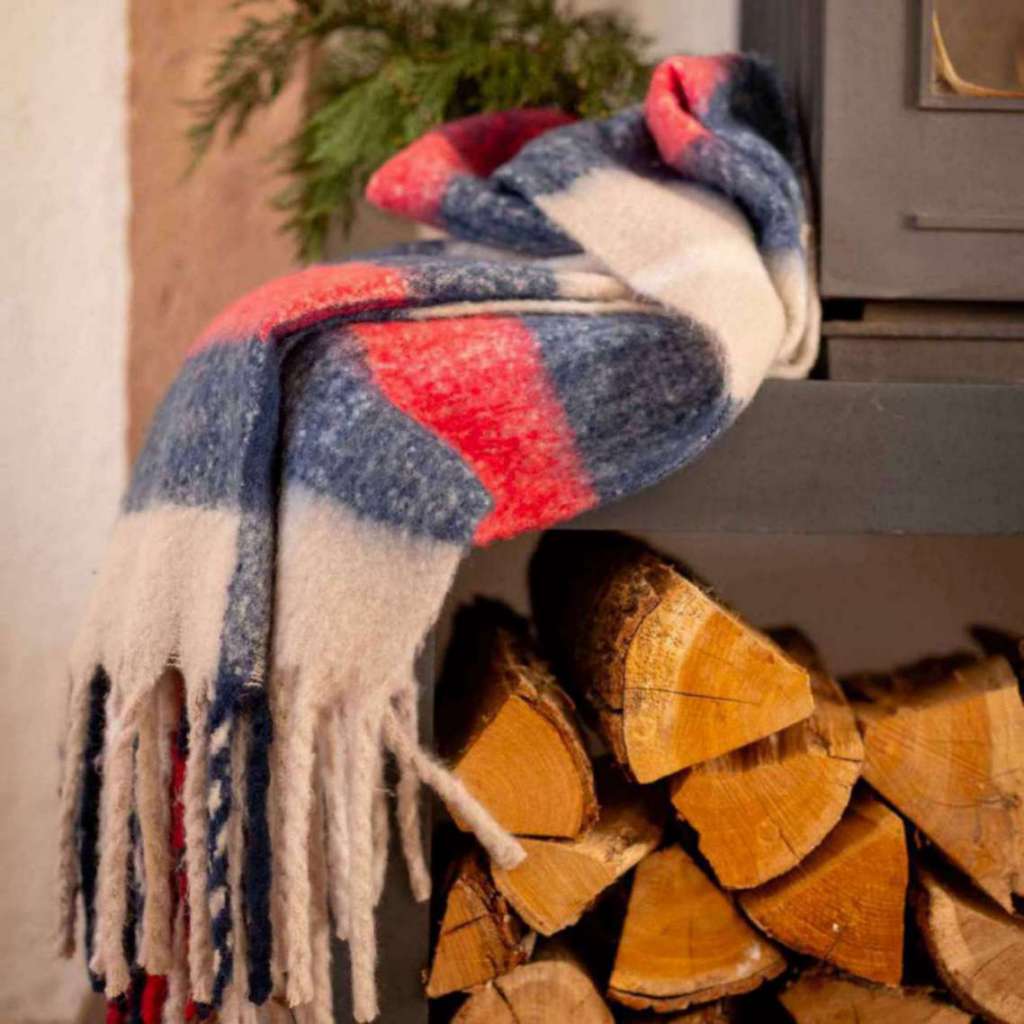
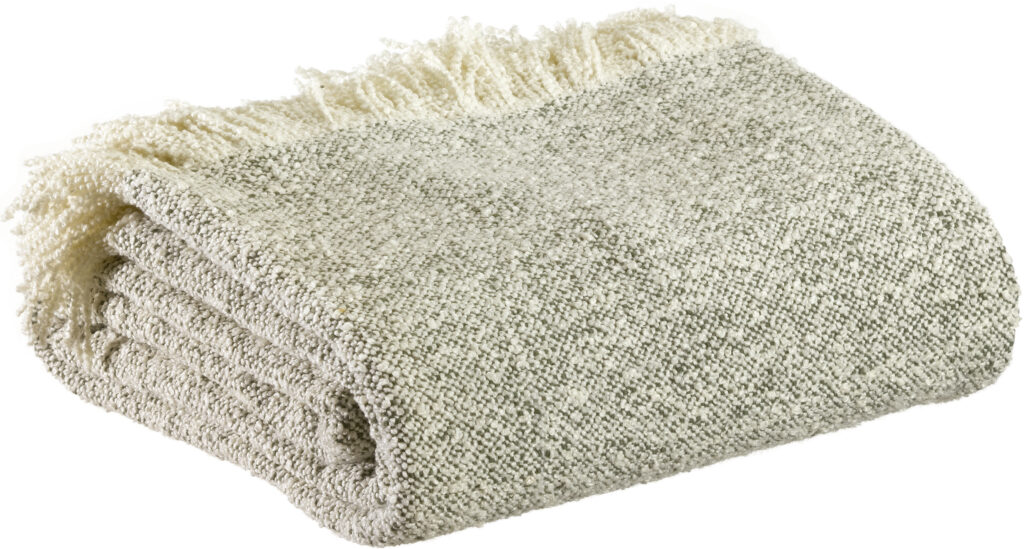
A statement throw such as Isabel tartan can work with a darker cushion such as Jaden Caviar, or with a softer marl texture. The key is to repeat at least one tone somewhere in the composition.
-
Isabel recycled tartan throw
59.90 € -
Jane marl bouclé throw 130 × 160 cm
69.90 €
Choose according to sofa colour
Beige or ecru sofa
Use natural shades for a calm look, or add forest green, terracotta, black or navy for stronger contrast.
Grey sofa
Warm it with camel, rust, mustard or beige. For a more graphic style, combine black, off-white and textured pieces.
Blue sofa
Ecru and camel soften it, while rust and terracotta create a warmer contrast. Different blue shades can also create a layered monochrome look.
Green sofa
Natural shades and ecru are easy partners. Terracotta, powder pink or brown can add personality.
Terracotta or colourful sofa
Let the sofa remain the focal point. Use quieter cushions in ecru, beige, brown or black and repeat only a small touch of the sofa colour in the throw.
Common mistakes
- Matching every item exactly.
- Using several strong patterns without a shared colour.
- Adding so many cushions that the sofa becomes impractical.
- Introducing a completely isolated colour with no connection to the room.
- Styling the throw so perfectly that no one wants to use it.
- Ignoring the scale of the sofa.
Change the look with the seasons
Throws and cushions are an easy way to update a living room without changing furniture. Autumn and winter suit richer textures and deeper colours, while spring can bring lighter fabrics and a softer palette.
Our five-step method
- Look at the sofa and the existing room colours.
- Choose two or three main colours.
- Pick one statement item.
- Add simpler pieces in varied textures and sizes.
- Remove one item if comfort starts to suffer.
Our advice
The best sofa is not the one that looks untouched. Throws should be used, cushions should move and the arrangement should adapt to everyday life.
You may also like
FAQ
Do throws and cushions need to match exactly?
No. Sharing a colour, texture or overall mood is usually enough.
How many cushions for a three-seater sofa?
Three to five is often a practical range, depending on sofa depth.
How many colours should I use?
Two or three main colours usually keep the composition clear.
Can I mix patterns?
Yes. It is easier when patterns share at least one colour and differ in scale. A strong patterned throw often works best with simpler cushions.


Leave a Reply