



Choosing bed linen sounds simple until you actually have to order it: what duvet-cover size do you need? how deep should the fitted-sheet pocket be? cotton gauze, flannel, percale or a washed finish? should the pillowcases match? how do you create a bed that looks good without making daily life more complicated?
The right bed linen is not simply what looks best in a photograph. It is what fits your mattress and duvet, matches how you sleep, works with the temperature of the room, feels pleasant to you and suits the amount of care you are willing to give it. This article is designed as a pillar guide to choosing bed linen: it covers the main decisions, then directs you to our more detailed guides when you need to go deeper.
Contents
- 1. Where should you start when choosing bed linen?
- 2. Get the dimensions right
- 3. Understand each piece of bed linen
- 4. Choose the right material
- 5. Choose according to your sleep profile
- 6. Adapt bed linen to the seasons
- 7. Colours, patterns and bedroom style
- 8. Build a coherent bed without buying everything at once
- 9. Think about care before buying
- 10. Budget, quality and priorities
- 11. Checklist before ordering
- 12. FAQ: how to choose bed linen
1. Where should you start when choosing bed linen?
Before looking at colour, fabric or collection, begin with three measurements: the mattress, the duvet and the pillows. Those three facts determine which products are actually compatible with your bed.
Then ask two comfort questions: do you tend to sleep hot or cold? Do you prefer a smooth, crisp feel or something softer and more textured? These answers are often more useful than a purely decorative preference.
Finally, think about real life. If you dislike ironing, naturally textured materials may suit you better. If you wash bedding very frequently, drying time and ease of care become more important.
Our recommended order of decisions
- 1. Check mattress, duvet and pillow dimensions.
- 2. Decide what you need: duvet cover, fitted sheet, pillowcases, flat sheet or a complete set.
- 3. Define the feeling you want: cool, soft, warm, textured or crisp.
- 4. Check care requirements.
- 5. Choose colours and finishes.
- 6. Add a throw, bed runner or cushions afterwards if they are genuinely useful.
This order prevents you from falling in love with a colour or collection before discovering that it does not suit your measurements or comfort needs.
2. Get the dimensions right
Size mistakes are frustrating because even beautiful bed linen becomes useless when it does not fit. Distinguish clearly between the bed size, mattress size and duvet size.
The fitted sheet must match the mattress
For a fitted sheet, use the exact mattress width and length. A 160 × 200 cm mattress therefore needs a 160 × 200 cm fitted sheet. But that is only part of the decision: you also need to check mattress depth and the pocket depth of the sheet.
A deeper mattress, topper or some comfort systems increase the height that needs to be wrapped. A pocket that is too shallow may ride up during the night or make the sheet difficult to fit.
We explain this in detail in How to choose a fitted sheet: size, depth and comfort.
The duvet cover matches the duvet, not the mattress
The cover should have the same dimensions as the duvet. This is simple, but often forgotten when people shop only from the bed size.
Two identical beds can use different duvet sizes depending on the amount of side drop preferred or the sleepers’ habits. Check the duvet label or measure it before ordering.
For detailed size guidance, see How to choose a duvet cover: size, material and style.
Pillowcases must match the pillows
Pillows can be square, rectangular and available in several dimensions. A case that is too large looks loose, while one that is too small compresses the pillow.
Check the actual pillow size, especially if you use both sleeping pillows and decorative cushions.
What about a flat sheet?
A flat sheet is more flexible in sizing, but it still needs enough fabric to cover the sleeping area and create the tuck or drop you want. Some people use it as a light layer between the body and duvet or to build a different bed setup according to the season.
3. Understand each piece of bed linen
A bed-linen setup can be very simple or quite complete. You do not need to buy every component at once. The useful thing is to understand the role of each one.
The duvet cover
It protects the duvet and occupies the largest visual surface of the bed. It often defines the bedroom mood. The material directly affects touch, first contact when you get into bed and day-to-day care.
The fitted sheet
It is in direct contact with the body and should stay securely around the mattress. Correct size and pocket depth come first. It can match the duvet cover, but it does not have to.
Pillowcases
They can coordinate the bed or introduce another colour. They are also the easiest pieces to change when you want to refresh the look without replacing the whole set.
The flat sheet
It can be used as a light layer, as a barrier between you and the duvet or as part of the visual composition. Not everyone uses one; it is a matter of habit rather than a requirement.
Bed runner, throw or quilt
These pieces add comfort and visual depth. They also help adapt the bed to a season without replacing the main bedding.
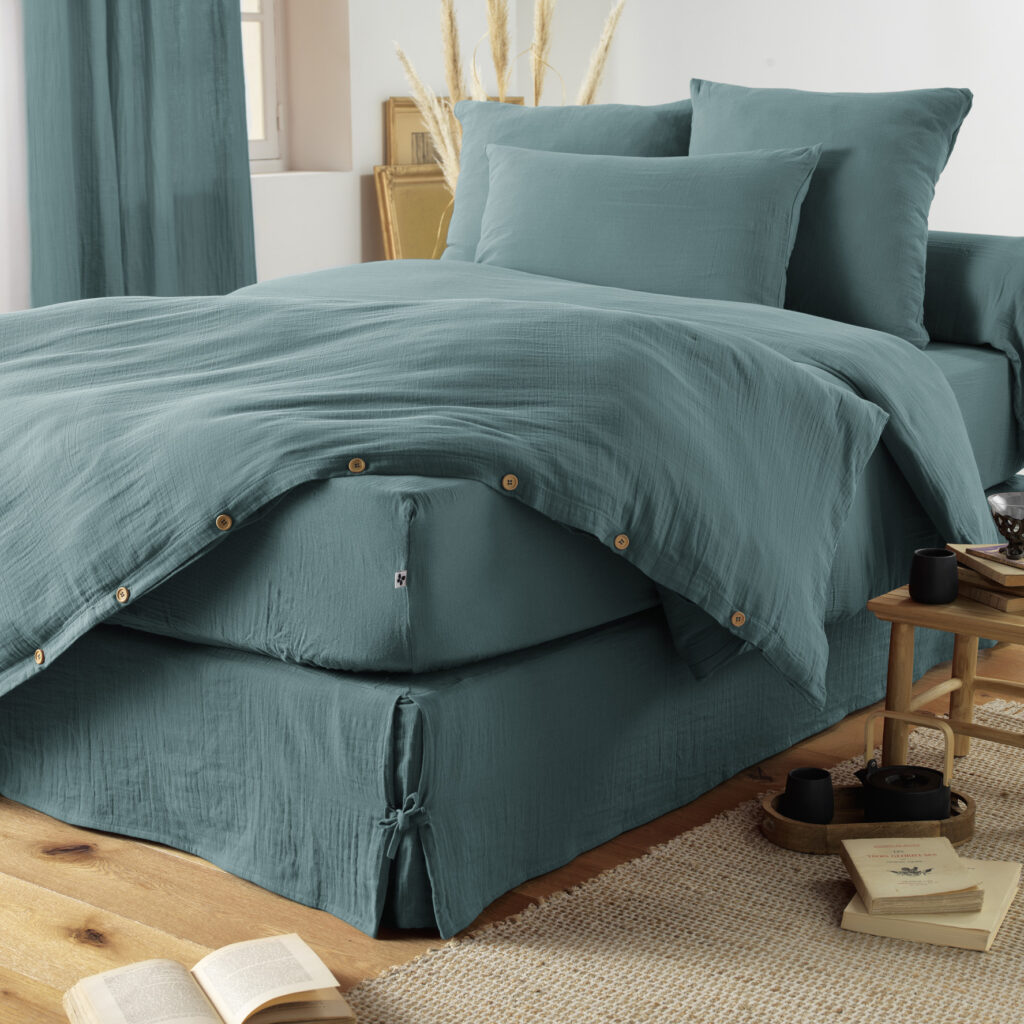
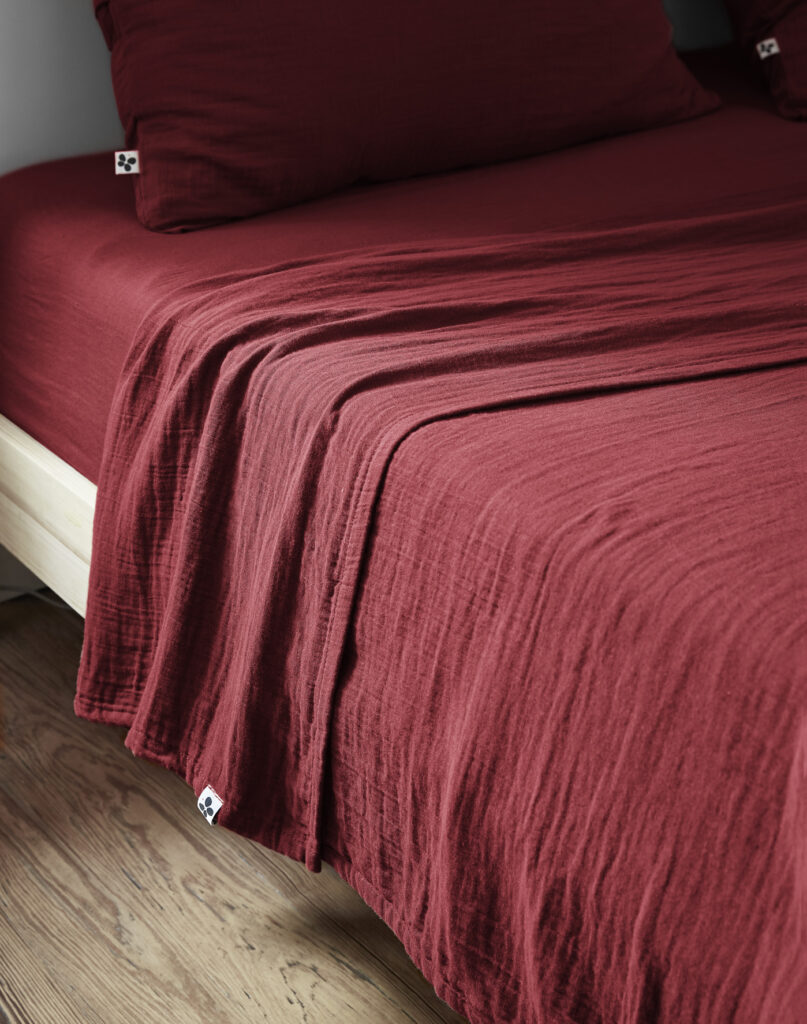
The essentials for building your bed
A fitted sheet, pillowcase and flat sheet allow you to build the bed piece by piece and mix colours more freely.
-

Fitted sheet GAÏA plain cotton gauze
From 31.90 € -
GAÏA plain cotton gauze pillow case
From 13.90 € -
Flat sheet GAÏA plain cotton gauze
From 53.90 €
4. Choose the right material: focus on the feeling, not just the name
The word “cotton” does not describe the whole experience of bed linen. Fibre, weave, treatment and finish all affect hand-feel. Two cotton products can therefore feel completely different.
The best material is the one that gives you the sensation you actually enjoy when you get into bed.
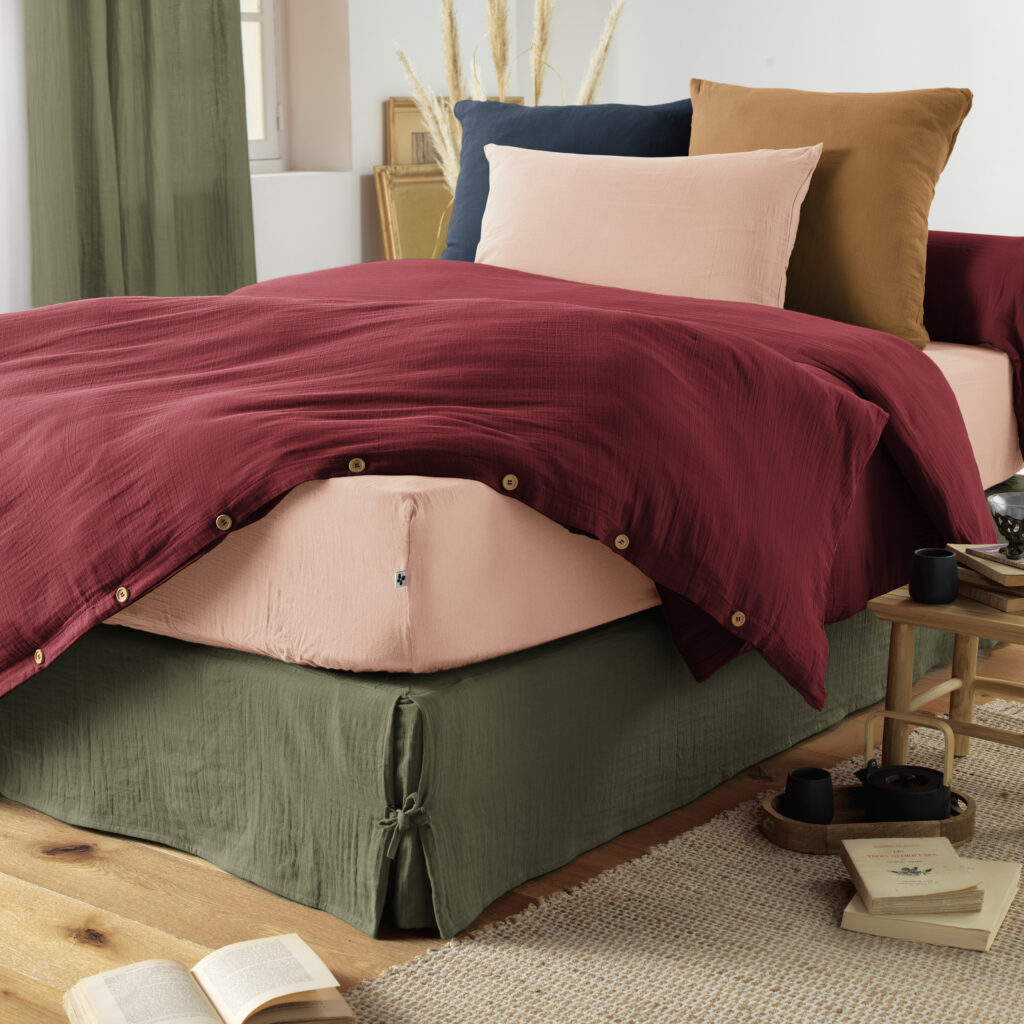
Cotton gauze: soft, textured and relaxed
Cotton gauze is known for its crinkled texture and casual appearance. It suits people who want a softer, natural-looking bed without a strict finish.
Because texture is part of the design, it can look good without a perfectly pressed appearance. It works particularly well in cosy, natural or bohemian bedrooms.
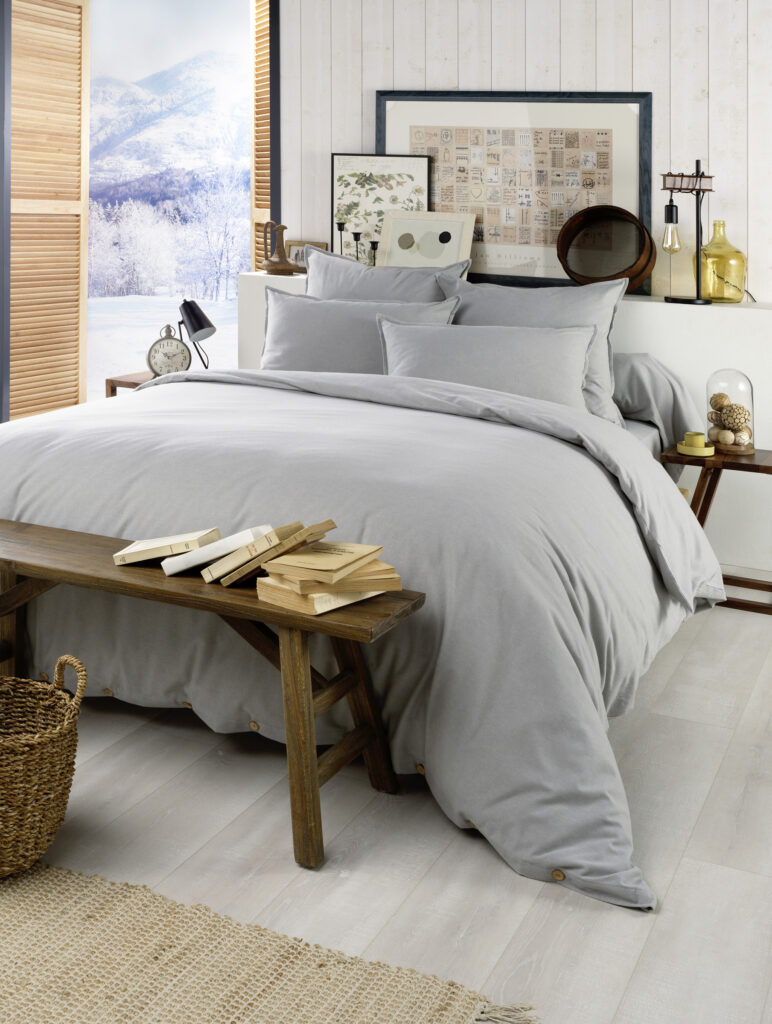
Cotton flannel: warmer at first contact
Flannel is useful for people who like the bed to feel warmer when they first get in. It is especially associated with autumn and winter.
If you tend to overheat at night, it may not be the best year-round option.
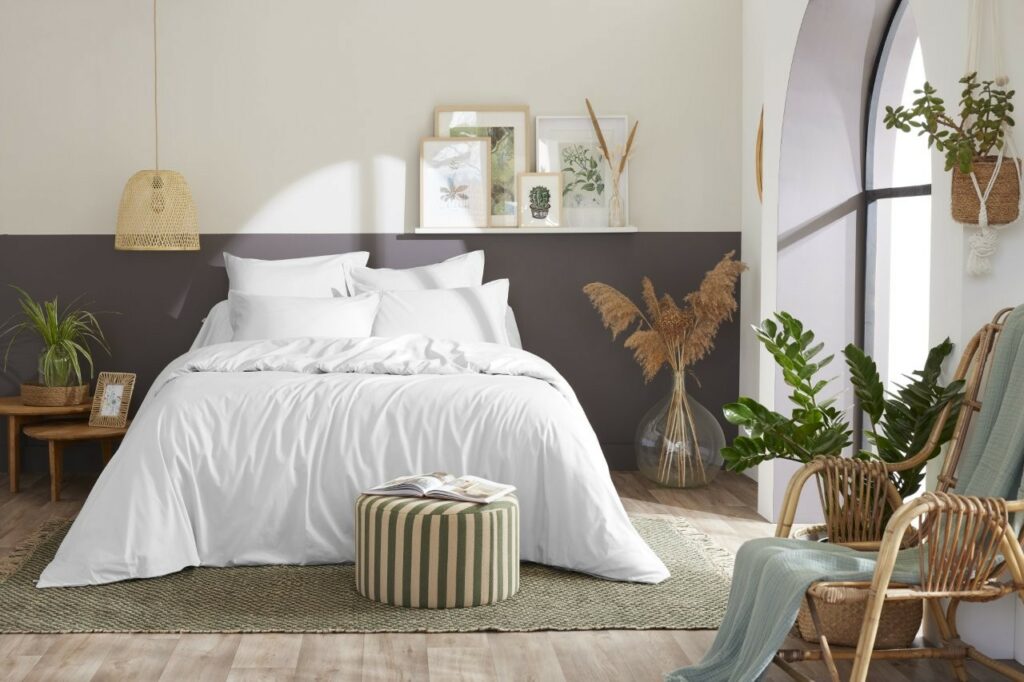
Percale: cooler and crisper
Percale suits people who enjoy a smoother, fresher touch and a more structured-looking bed. It can be a good direction for sleepers who dislike an overly enveloping feel.
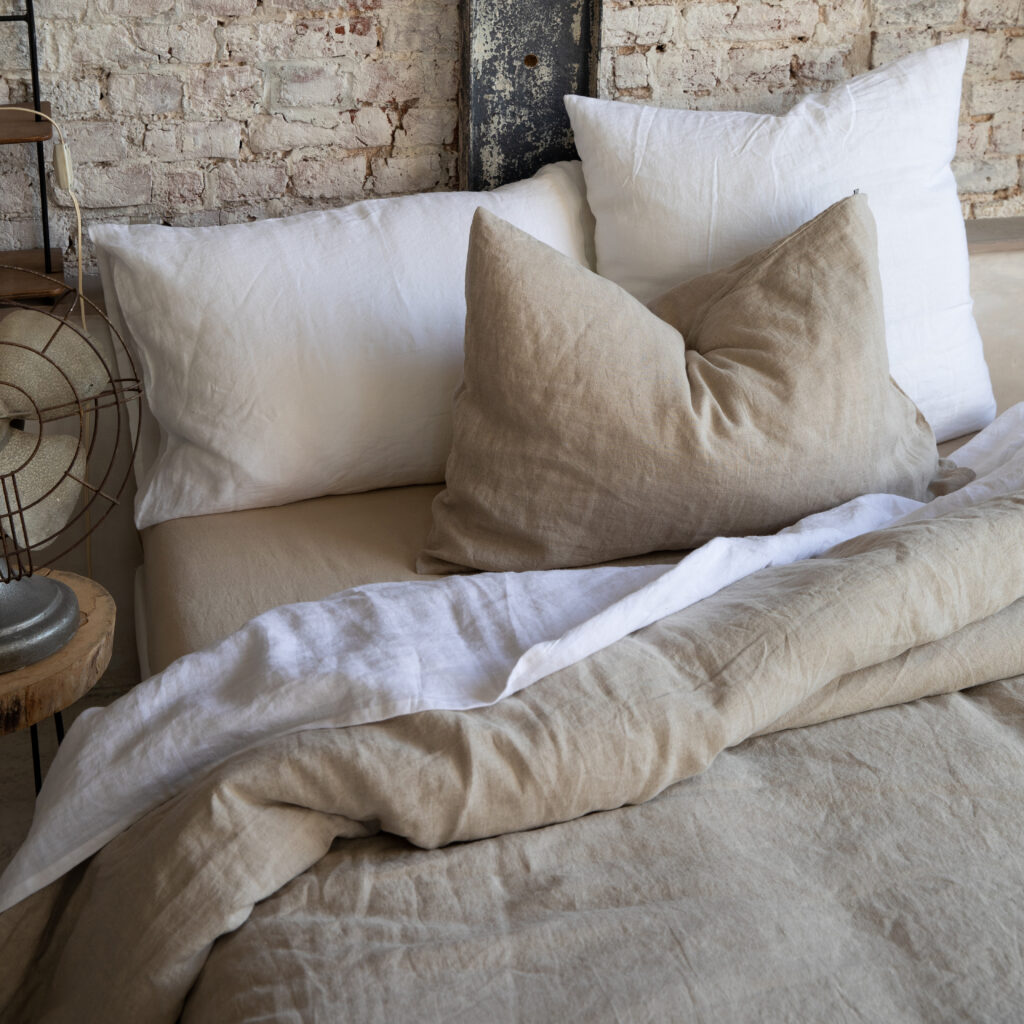
Washed and stonewashed finishes: more relaxed character
Washed finishes often create a softer, more informal and textured look. They appeal to people who like fabrics that already have a lived-in character and work naturally with relaxed interiors.
For cold-season materials, our guide Which bed linen material should you choose for autumn and winter? goes into more detail.
Four materials, four different experiences
These duvet covers illustrate four distinct directions: cotton gauze, flannel, percale and a stonewashed finish.
-
Duvet Cover GAÏA Plain Cotton Gauze
From 53.90 € -
Duvet Cover Plain Flannel CANDICE
From 36.00 € -
Duvet Cover Percale plain BALLY
From 89.90 € -
Duvet Cover Stonewashed Zeff
From 90.90 €
5. Choose according to your sleep profile
Bed linen should suit the person sleeping in it, not just the bedroom decor.
You often feel cold
Look for a more enveloping first contact and think about additional layers. Flannel, a throw, bed runner or quilt can add comfort.
But do not try to solve a genuinely cold room only with textiles. Heating, insulation and draughts may also need attention.
You often feel hot
Choose a fresher feel, breathable materials and avoid unnecessary layers. Percale, lighter materials or simply a less layered bed may be more comfortable.
You move a lot during the night
A correctly fitted sheet becomes especially important. A sheet that is too small or too shallow can come loose more easily.
You dislike ironing
Materials whose natural texture is part of the look are often easier to live with. Cotton gauze and washed finishes can suit people who prefer a relaxed appearance.
You like a very crisp, tidy bed
Choose smoother materials and keep the colour scheme simple. A plain duvet cover, coordinated pillowcases and a well-fitted sheet create a more structured result.
You share the bed
Consider both sleepers. If one person sleeps warm and the other cold, a breathable base with an individual extra layer, such as a throw at the foot of the bed, can be a practical compromise.
6. Adapt bed linen to the seasons
You do not have to replace your entire bed linen four times a year. A versatile base can work for long periods, while a few extra pieces adjust the comfort.
Spring and summer
Many people prefer lighter layers, a fresher sensation and less visual weight. Lighter colours can work well too, but they are not compulsory.
Autumn
This is a good moment to bring back more texture: throws, bed runners, earth tones and slightly more enveloping fabrics.
Winter
Warmth becomes more important, while ventilation still matters. Intelligent layering is often more practical than replacing everything.
If the aim is mainly to create a more inviting room, see How to make a bedroom feel warmer in winter.
7. Colours, patterns and style: make the bed work with the room
Bed linen covers a large visual surface. It can calm a room, brighten it or give it a strong personality.
Start with two or three colours
A limited palette is easier to coordinate. Examples include ecru + camel + deep green, beige + terracotta + brown, or off-white + navy + wood.
Those colours can be distributed between the duvet cover, pillowcases, throw and curtains.
Tone-on-tone is an easy solution
Using related shades creates depth without a hard contrast. A sand-coloured bed can work with ecru pillowcases and a camel throw, for example.
Patterns need some breathing space
If the duvet cover has a strong pattern, keep the fitted sheet and some pillowcases calmer. If everything is plain, add pattern through one pillowcase, cushion or throw.
Remember the rest of the room
Curtains, rug, walls and furniture already form part of the palette. Bed linen does not need to match everything exactly; it only needs to work with the whole room.
For a more enveloping interior, Create a cosy bedroom for autumn and winter develops this approach further.
8. Build a coherent bed without buying everything at once
There are two main approaches: buy a coordinated set or build the bed gradually.
A complete set: simple and coordinated
A set gives you an immediate coherent result when all measurements are known. It is useful if you do not want to make every colour decision separately.
Always check exactly what the set contains, because not every set includes the same pieces.
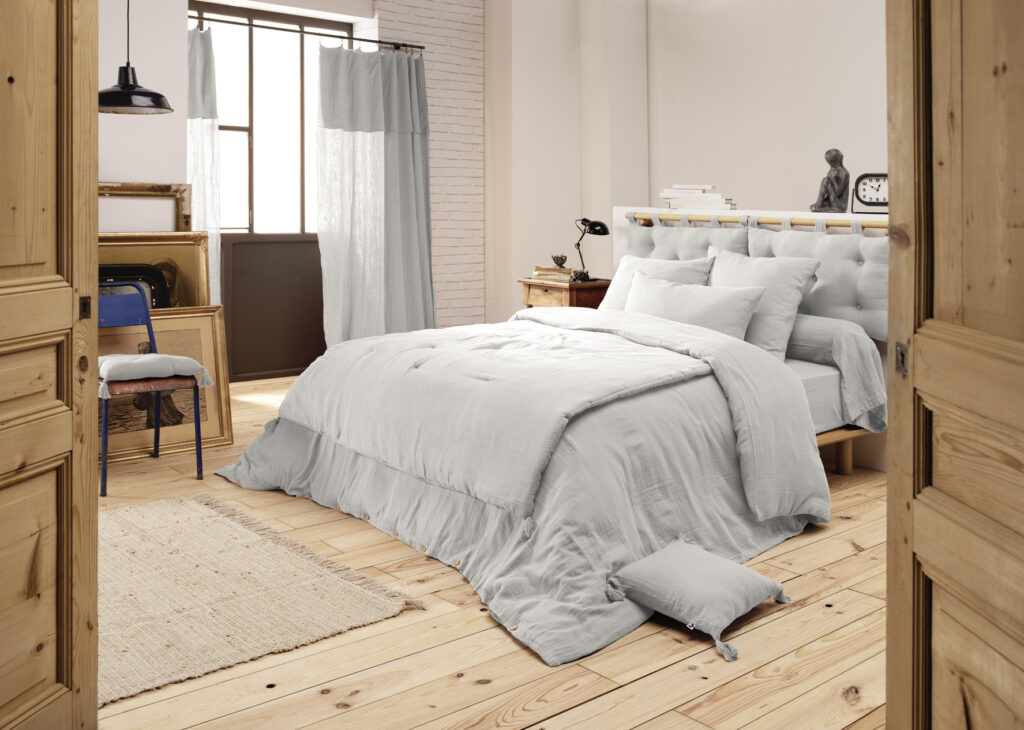
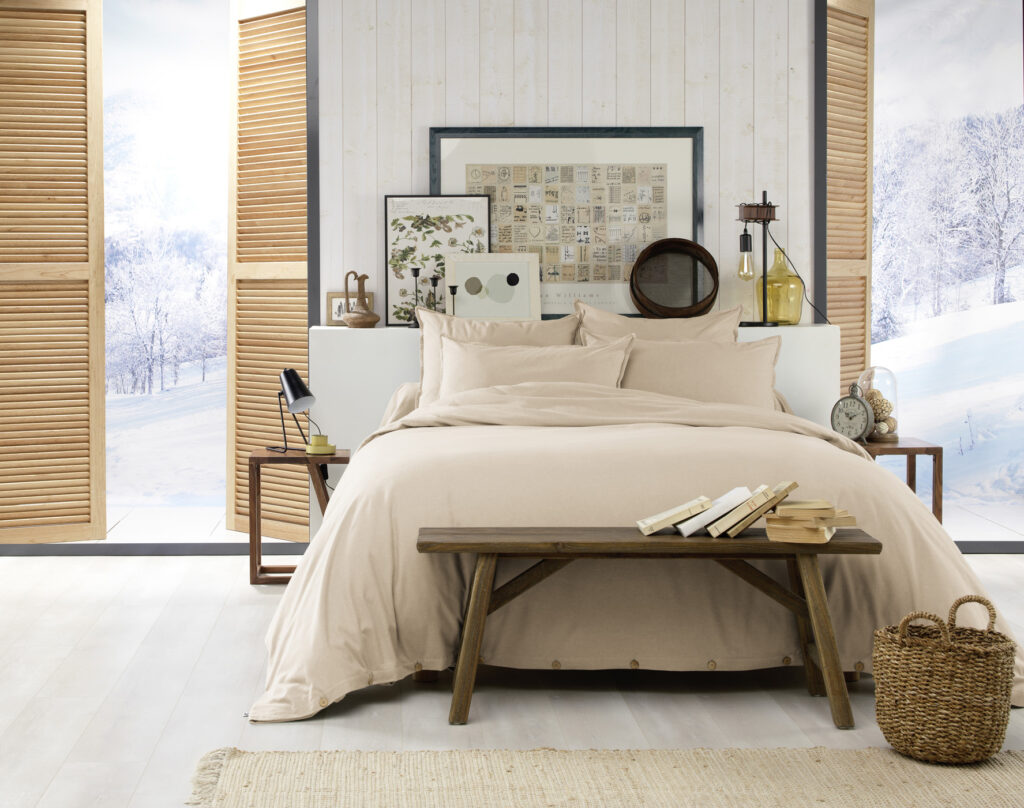
Two sets for two different atmospheres
Gaïa cotton gauze gives a softer, textured feel, while Candice flannel is more closely associated with cold-season comfort.
Build piece by piece for more freedom
Buying the duvet cover, fitted sheet and pillowcases separately gives you more freedom with colours, replacement and sizing.
This also works well when two sleepers have different preferences or when you enjoy changing the bedroom through the seasons.
Start with the piece that matters most
If you are spreading the budget, start with the piece that affects comfort or function most: a fitted sheet that stays in place, a duvet cover whose feel you enjoy, then pillowcases and decorative layers.
9. Extra layers: throw, bed runner and quilt
Once the base is right, extra layers help adjust both comfort and style.
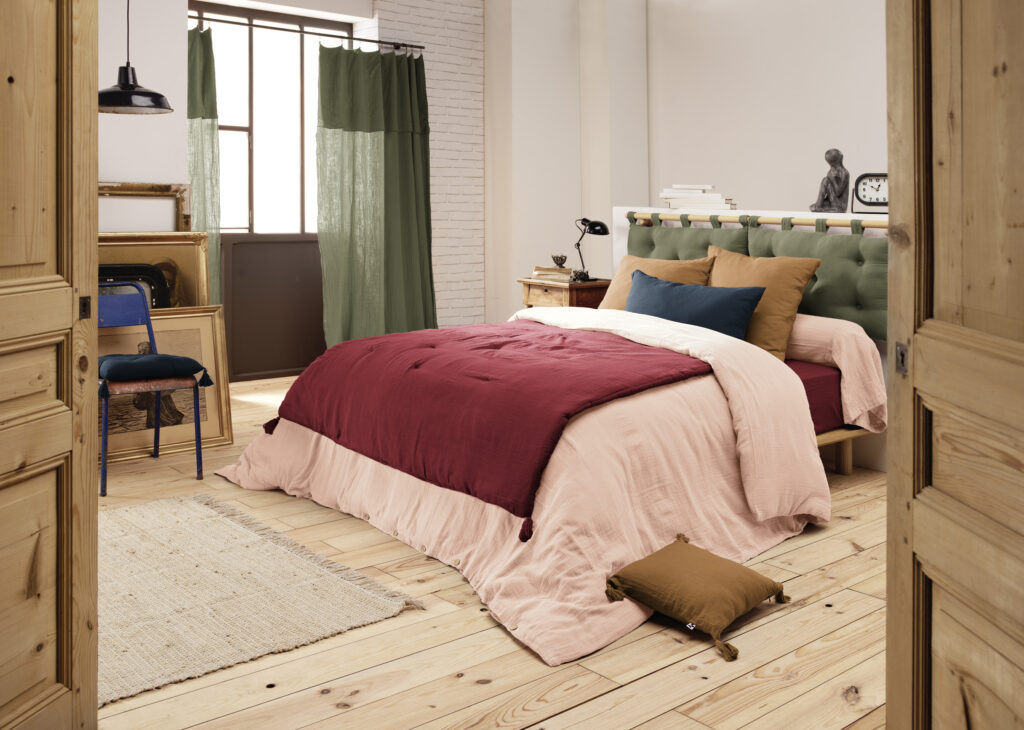
A throw is mobile and easy to use on the bed or elsewhere in the home. A bed runner visually structures the lower part of the bed. A quilt creates a fuller, more generous layer.
For the difference between these uses, see Throw or blanket: what is the difference and which should you choose?.
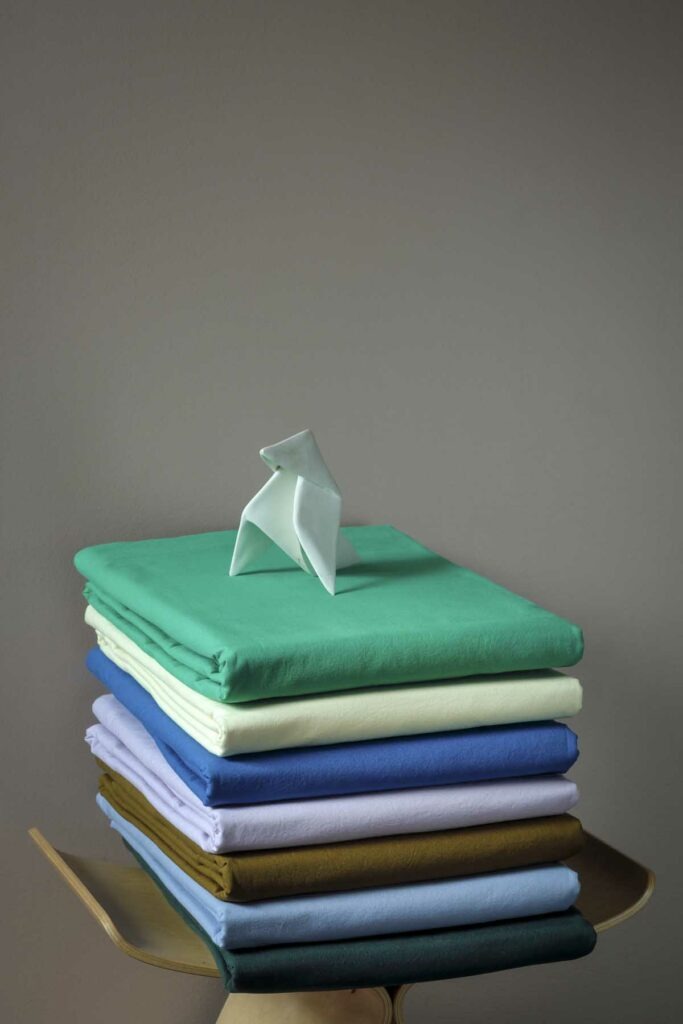
Finish the bed without replacing the base
-
GAÏA plain cotton gauze bed runner
From 39.90 € -
Laly plain duvet, 85 x 200
From 94.90 € -
Céleste flat sheet
From 110.00 €

10. Think about care before buying
The best bed linen is what you will actually enjoy using and washing. A beautiful material that is too demanding for your routine may spend more time in the cupboard than on the bed.
Read the care label before choosing
Washing temperature, spin, drying and ironing should fit your habits. If you rely heavily on a tumble dryer, check whether the textile allows it.
Do not overload the washing machine
Large duvet covers, sheets and complete sets need enough space in the drum to wash and rinse properly.
Dry completely before storage
Slightly damp bedding should not be folded into a cupboard. This becomes especially important in winter when indoor drying takes longer.
Our complete routine is in How to care for household linen properly in winter.
How many sets of bed linen do you need?
There is no mandatory number. You simply need enough rotation to wash and dry one set without creating a practical problem.
Having several sets can also make it easier to vary materials or colours according to the season.
11. Budget: where should you spend first?
Bed-linen prices vary according to material, manufacturing quality, dimensions, finishes and product complexity. The most expensive option is not automatically the best one for you.
Prioritise suitability first: correct size, material you genuinely like and care that fits your routine. A well-suited product will be used more than a premium piece that does not fit your habits.
On a tighter budget
Replace the piece that causes a real problem first: fitted sheet that comes loose, worn pillowcases or a duvet cover whose feel you no longer enjoy.
With a medium budget
Build a coherent set around one main material, then add extra pillowcases or a throw.
With a larger budget
You can create a complete set, rotate seasonal sets or explore more specific finishes and fabrics.
A bedding set can also simplify coordination by grouping several useful pieces together.
12. Choosing bed linen for a child’s bedroom
The same fundamentals apply: correct dimensions, suitable material, practical care and colours the child actually enjoys.
Ease of washing often becomes even more important. Avoid adding decorative layers that make daily life unnecessarily complicated.
For younger children, the sleep environment must always follow age-appropriate safety guidance; decoration should never take priority over safe sleep.
13. Choosing bed linen for a guest room
For a guest room, versatility and simplicity are usually best. A comfortable material, easy colours and straightforward care are more useful than something extremely personal.
Keep an additional layer accessible too, such as a throw or blanket, so guests can adjust their comfort without having to ask.
14. Giving bed linen as a gift
Bed linen can be a wonderful gift, but only when sizes and preferences are sufficiently known.
If you are unsure about the duvet, mattress or pillows, avoid guessing a full set. Our guide What bed linen should you give for Christmas? explains the risks and safer alternatives.
15. The most common mistakes
- Choosing a duvet cover from the bed size alone.
- Forgetting mattress depth and fitted-sheet pocket depth.
- Assuming every pillow is the same size.
- Choosing a material only because it is fashionable.
- Adding many layers even though you already sleep hot.
- Buying a strong colour without considering curtains, walls and furniture.
- Choosing care requirements that do not fit your routine.
- Assuming every piece of the bed has to match exactly.
- Storing bedding while it is still damp.
- Adding many cushions without considering how much work they create every morning.
16. Checklist before ordering
- Mattress: width, length and depth checked.
- Duvet: exact dimensions checked.
- Pillows: sizes and quantity checked.
- Material: chosen according to the feel you really prefer.
- Temperature: your hot/cold sleep profile considered.
- Care: washing, drying and ironing fit your routine.
- Colours: palette works with the bedroom.
- Set content: checked before buying any bedding set.
- Extra layers: throw, runner or quilt only if useful.
- Stock: correct size and colour available before checkout.
If these ten points are clear, you have already avoided most bed-linen buying mistakes.
17. Quick method according to your main goal
You mainly want more comfort
Start with the fitted sheet and the materials in direct contact with your body. Then review the duvet cover and warmth layers.
You mainly want to change the decor
Keep the dimensions and materials you already enjoy, then change colour through pillowcases, a throw or bed runner.
You often sleep too hot
Reduce layers and look for a fresher feel. Thermal comfort matters more than creating a heavily layered cosy look.
You often feel cold
Work with material feel and removable extra layers instead of automatically choosing the thickest textile.
You genuinely do not know where to begin
Measure mattress, duvet and pillows, then choose between three broad sensations: soft and textured, warm and enveloping, or cool and crisp. That decision already reduces the field dramatically.
18. Our advice at Anna & Moi
For us, good bed linen is not what turns the bedroom into a catalogue photograph for five minutes. It is what makes you want to get into bed at night, remains pleasant after repeated washing and does not turn making the bed into a battle every morning.
Think about your real routine: bedroom temperature, slow weekend mornings, winter drying, whether you iron and which colours you still enjoy months later. That is where the right choice sits.
And when you are torn between two options, choose the one that is easiest to live with. You can always enrich the bed later with pillowcases, a throw or a runner rather than starting again from scratch.
Guides to keep nearby
- How to choose a duvet cover: size, material and style
- How to choose a fitted sheet: size, depth and comfort
- Which bed linen material should you choose for autumn and winter?
- What bed linen should you give for Christmas?
- Throw or blanket: what is the difference and which should you choose?
- How to make a bedroom feel warmer in winter
- How to care for household linen properly in winter
- Create a cosy bedroom for autumn and winter
FAQ: how to choose bed linen
What is the first thing to check before buying bed linen?
Start with the actual dimensions of the mattress, duvet and pillows. These determine which products are compatible before you even choose material or colour.
Which bed-linen material should I choose if I sleep hot?
Look for a fresher sensation and avoid unnecessary layers. Percale may suit people who enjoy a crisp, cooler feel, although material preference remains personal.
What should I choose if I get cold easily?
A more enveloping material such as flannel can be useful in cold weather. You can also keep a versatile base and add a throw or quilt.
Does the fitted sheet have to match the duvet cover?
No. You can use tone-on-tone colours, contrast or a neutral fitted sheet. The aim is coherence with the whole room, not perfect matching.
What duvet-cover size should I choose?
The cover should have the same dimensions as the duvet. Do not choose from mattress size alone.
How do I choose fitted-sheet pocket depth?
It must suit the actual mattress depth and allow the sheet to wrap securely underneath. A topper must also be taken into account.
How many sets of bed linen should I own?
There is no fixed number. Keep enough rotation for your washing and drying routine and how often you change the bed.
Complete bedding set or separate pieces?
A complete set simplifies coordination. Separate pieces give more freedom with sizes, colours and gradual replacement.
How can I make the bed feel warmer without replacing everything?
Add a throw, bed runner, pillowcases in a complementary colour or a different texture. One well-chosen layer can be enough.
What bed linen works if I dislike ironing?
Materials whose natural texture is part of the look, such as cotton gauze and some washed finishes, can be easier to live with visually.
Can I mix different materials on the same bed?
Yes. You might keep a smoother base and add a textured throw. Avoid combining so many strong materials that the bed becomes visually confused.
How do I know I have made the right choice?
The bedding should fit correctly, feel pleasant, suit your sleeping temperature, be realistic to care for and work with the room. If those criteria are met, you have a strong foundation.

Leave a Reply