




Throw and blanket are often used almost interchangeably, yet they do not always serve the same purpose. A throw is usually easier to move around, more decorative and often associated with a sofa, armchair or the end of a bed. A blanket traditionally suggests broader coverage and a clearer warmth function for the body or the bed.
In practice, the boundary is flexible. Some large throws measure 140 × 200 cm and can work very well on a bed, while attractive blankets and bedspreads can become decorative living-room textiles. To decide between a throw or blanket, it is more useful to look at how you plan to use it than at the product name alone.
1. The main difference is use, not vocabulary
A throw is something you can reach for quickly. It stays on the sofa, over an armchair, in a basket or folded at the foot of the bed. You wrap yourself in it to read, watch a film or add a temporary layer of comfort.
A blanket is traditionally designed to cover more: your body during sleep, a larger area of the bed or more than one person. It may be larger, more regular in size and less focused on decorative styling.
A bedspread has another role again: it primarily dresses and protects the bed. It may add a little warmth, but its first purpose is often visual and protective.
2. Throw, blanket and bedspread: a simple distinction
- Throw: portable, decorative and easy to use on sofa or armchair.
- Blanket: more focused on warmth and broader coverage for body or bed.
- Bedspread: designed to cover and visually finish the bed, sometimes with light extra warmth.
These are guidelines rather than strict rules. A large throw can become an extra blanket. A beautifully textured blanket can live on a sofa. Size and intended use matter more than the label.
3. For the sofa, a throw is usually the most practical
On a sofa, a throw is easy to fold, move from one seat to another and leave visible without making the room look like bedding has been left out.
Sizes around 130 × 160, 130 × 180 or 140 × 200 cm work for many individual uses. Taller people, or anyone who likes to cover both legs and shoulders, may prefer the longer formats.
If the throw is mostly decorative, a smaller size can be enough. If it is meant to keep you comfortable for a two-hour film, check length before pattern.
4. For an armchair, keep it manageable
An armchair often suits a less bulky throw. It should be easy to fold over the arm or back without taking over the seat.
Hand-feel is especially important here because the throw is frequently used directly against arms, legs and neck. A pleasant material and an easy-to-fold size are more useful than sheer volume.
5. On the bed, choose according to function
A throw at the foot of the bed adds colour, texture and a little extra warmth around the feet. It does not need to cover the entire mattress width if the main purpose is decorative.
If you actually want to sleep under it, dimensions become much more important. The textile needs to cover enough of the body without being pulled out of place with every movement.
To dress the entire bed, a bedspread or large blanket is usually more suitable than a compact sofa throw.
6. Throws for sofa, armchair or the end of the bed
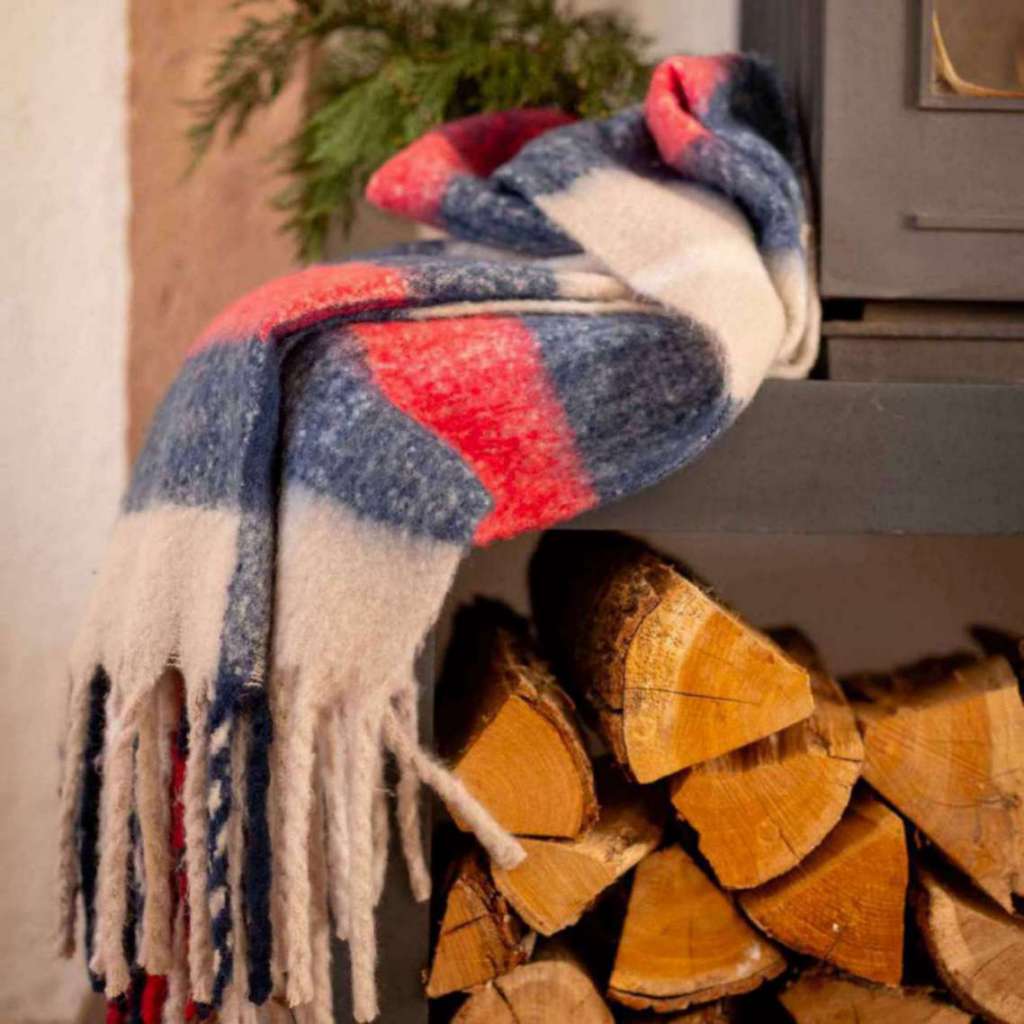
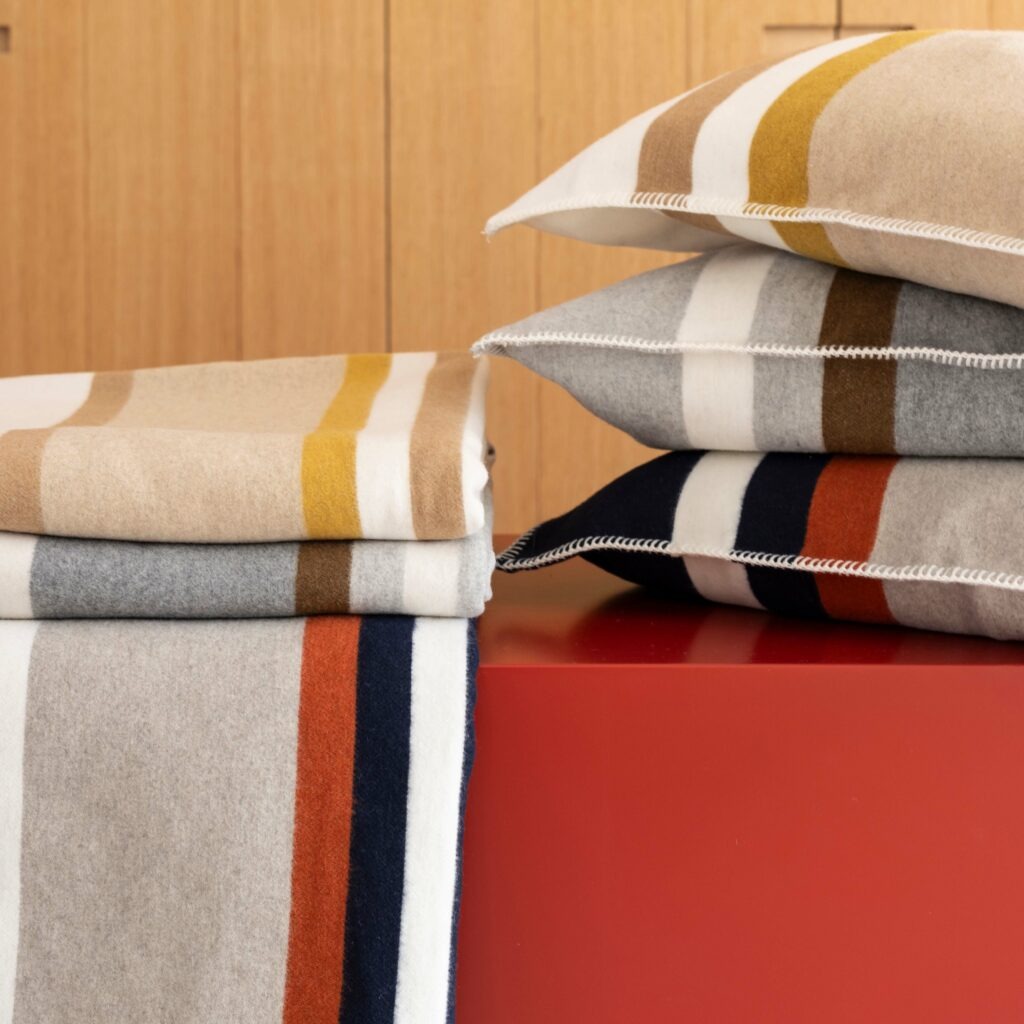
These models show different ways a throw can work: a strong tartan pattern, a calmer textured look, a generous everyday format or a jacquard with more decorative presence.
-

Isabel recycled tartan throw
59.90 € -
Kinta fleece-look throw 130 × 160 cm
79.90 € -
Carina throw 130 x 190
From 129.00 € -
Gioia recycled jacquard throw 140 x 185
119.90 €


7. What throw size should you choose?
The ideal size depends on the person and the furniture. There is no single universal format.
- Around 120 × 150 cm: compact extra layer, easy to handle, mainly for legs and shoulders.
- 130 × 160 to 130 × 180 cm: highly versatile for sofa and armchair.
- 140 × 180 to 140 × 200 cm: more enveloping, useful for taller people and the foot of a bed.
- Larger than this: starts to overlap with blanket or bedspread use, depending on proportions and fabric.
Do not look only at the numbers. Picture how you sit. Do you just want your legs covered, or do you want to wrap up to the shoulders? On a bed, do you want to cover the lower section or the entire width?
8. What blanket size should you choose?
A blanket used on the bed should be chosen according to mattress size and the amount of side coverage you want. The more it is used through the night, the more important sufficient width becomes.
If it is only folded at the foot of the bed and used when the temperature drops, it can be smaller. If two sleepers need to share it, a genuinely bed-sized format is much more practical.
That is why a 140 × 200 cm throw can be excellent on a sofa yet too limited as the main extra blanket on a large double bed.
9. Warmth is not only about thickness
A thick textile is not automatically the best choice. Warmth also depends on fibre type, fabric construction, density, airflow and how well the textile wraps around the body.
A heavier fabric can create a strong cocooning sensation. A lighter one may be all you need in a well-heated home or during transitional seasons.
Before choosing, decide whether you want decoration, occasional extra warmth or a genuinely warmer additional layer.
10. Wool: useful when real warmth is the priority
Wool is naturally associated with winter textiles. It can offer strong warmth while remaining suitable for throws that are used season after season.
The hand-feel varies enormously according to fibre and finish. Some people love the authentic feel, while others prefer something smoother. For a gift, it helps to know the recipient’s preference.
11. Cotton: versatile and easy to live with
Cotton throws can feel less overtly wintry but are useful across a longer part of the year. They work well in homes that remain comfortably heated.
They can also suit people who dislike the very warm or bulky feel of heavier winter textiles.
12. Recycled fibres and blends
Recycled and blended throws now come in a wide variety of constructions: tartan, jacquard, knit, plain or two-tone. Composition, feel, care and intended use all matter.
It is better not to assume that all recycled throws behave the same way. Two models can feel very different depending on the fibres and the weave.
13. In a well-heated home, do not overbuy warmth
If your living room stays at a comfortable temperature, a very heavy throw may end up being used less than expected. A medium-weight or more breathable textile can be much more pleasant.
In an older house, a cooler room or a space with draughts, a more enveloping throw may become an everyday essential.
14. For someone who is always cold, coverage matters more than decoration
When you are often cold, the most beautiful throw is the one you actually use. Look for enough length to cover feet, legs and shoulders, and choose a fabric that gives a real sense of warmth.
A very decorative but short throw may spend its life over the sofa back. A larger comfortable model is more likely to become part of every evening.
15. Generous formats for more coverage
Throws around 140 × 200 cm already provide a much more enveloping experience. They work well on larger sofas, for taller people or as an extra layer at the foot of the bed.
-
Maia recycled throw, 140 x 200
84.90 € -
Titou recycled throw, 140 x 200
99.90 €


16. Throw or blanket for sleeping?
For a nap, a large throw may be completely sufficient. For a whole night, a blanket sized for the bed is usually more comfortable because it covers more and moves less.
A throw still works very well as an extra layer over the duvet during a cold spell. In that case, place it over the legs or lower half of the bed rather than expecting it to replace a full blanket.
17. Throw or blanket for a child?
For children, the choice should always suit age and use. On a sofa or in a reading corner, a light washable throw can be very practical.
For sleep, follow age-appropriate safe-sleep recommendations and do not add unsuitable loose textiles to the sleep space of very young children.
For older children, a throw is mainly a comfort accessory for reading, watching a film or decorating the bedroom.
18. Bedspread: when the main purpose is to cover and finish the bed
A bedspread covers a much larger surface and immediately structures the bedroom. It can also protect bedding from dust, clothes placed on the bed or pets.
It may add some warmth, but it should not automatically be treated as a night blanket. Check its material, weight and dimensions.
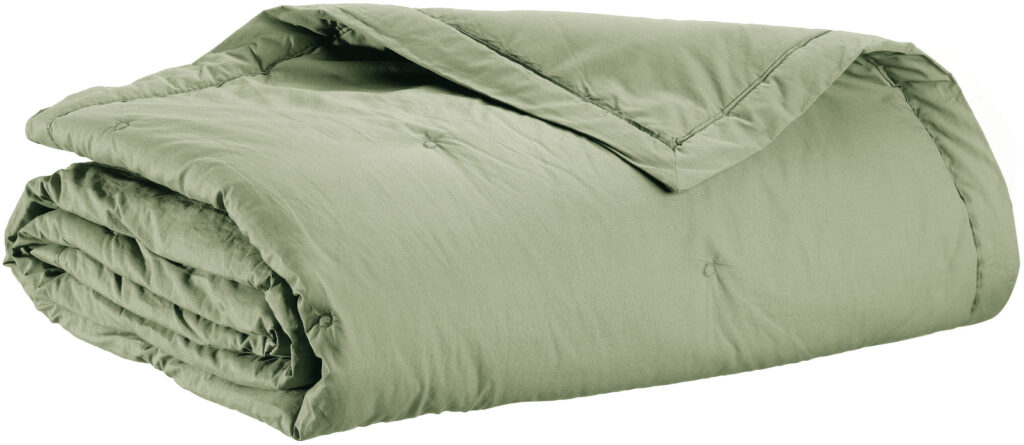
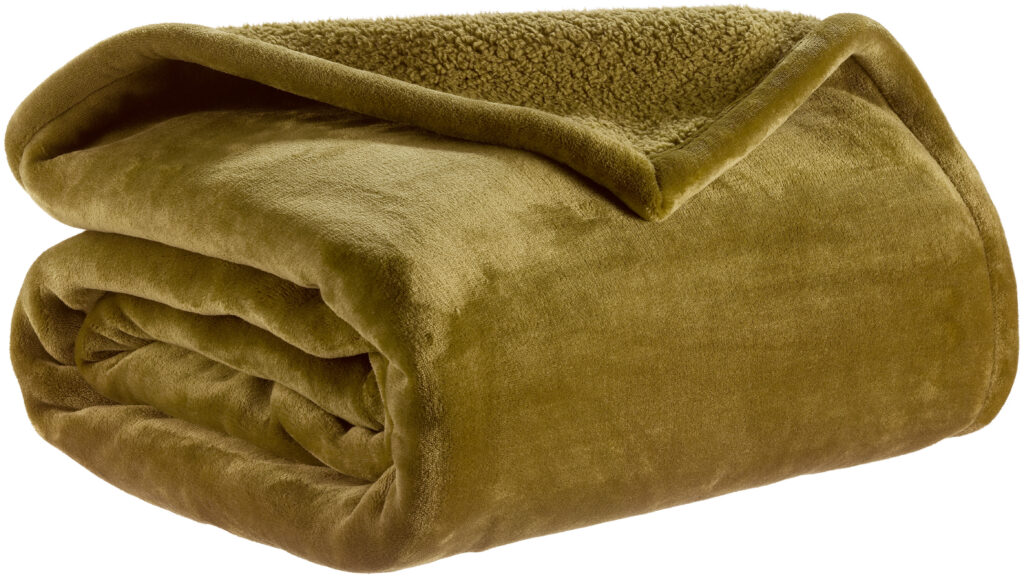
Bedspreads for broader bed coverage
-
Tika bedspread
From 139.90 € -
Zeff stonewashed bedspread
From Original price was: 259.90 €.155.90 €Current price is: 155.90 €. -
Michka bedspread 220 x 240
From 54.90 €

19. Throw or bedspread for a small bedroom?
In a small bedroom, a large heavy bedspread can visually dominate the room, especially in a dark colour. A throw folded at the foot of the bed creates texture without covering the entire bedding set.
On the other hand, if the bedding is very patterned, a plain bedspread can visually simplify the bed.
20. How to coordinate a throw with the living room
A throw can repeat a colour already present in a cushion, curtain or rug, but it does not need to match exactly.
On a neutral sofa, tartan, stripes or a deeper colour can add personality. On a sofa that already has several colours or patterns, a plain or two-tone throw may calm the overall look.
Texture also creates contrast: knit, fringes, jacquard or a smoother surface each change the visual effect.
21. How to place a throw without making the room feel staged
You do not have to fold a throw perfectly. Drape it loosely over an arm, let it fall across the back or fold it once at the end of the sofa.
On the bed, one simple fold across the lower third often works. The goal is to add a layer, not hide the bedding underneath.
22. Throw or blanket as a gift?
A throw is usually easier to give. You do not need the exact bed dimensions and it can be used in several rooms.
A large bed blanket or bedspread requires more knowledge about the bedroom, the bed and the recipient’s habits.
For Christmas gifting, the throw therefore has a practical advantage. See also Christmas home linen gift ideas: beautiful, useful gifts that last.
23. How much should you spend?
Price varies according to fibre, dimensions, weave and finishing. A throw can range from a small decorative present to a substantial textile investment.
When comparing two options, do not look only at price. Check usable dimensions, composition, care and how much of the textile actually serves your intended use.
A more expensive throw that is large enough and pleasant to use may be used far more often than a cheaper one chosen only for its colour.
24. Care needs to match real life
A sofa throw is exposed to crumbs, drinks, children and sometimes pets. If it will be used every day, care requirements become an important buying criterion.
Always check the care label. Do not assume a thick throw can automatically go in the washing machine or that a lighter one can tolerate high-temperature drying.
Mamimosa’s rule is to treat stains early and never rub randomly. Follow the fibre composition and manufacturer’s care instructions.
25. How to store throws and blankets out of season
Store them clean and completely dry. Larger blankets can be folded on a shelf or placed in a breathable storage bag. Avoid compressing textured materials very tightly for long periods if that may flatten them.
For throws used throughout much of the year, a basket in the living room is often the best solution: accessible without cluttering the sofa.
26. Which option for each room?
- Living room: versatile throw that is decorative and easy to move.
- Armchair: compact throw with a pleasant hand-feel.
- Bedroom: large throw, blanket or bedspread depending on the coverage you need.
- Guest room: an extra throw visible at the foot of the bed lets guests adjust their own comfort.
- Reading corner: light-to-medium throw that is easy to grab and put away.
27. Our five-question method
- 1. Where will you use it: sofa, armchair or bed?
- 2. Is the priority decoration or real additional warmth?
- 3. How much of the body or bed needs to be covered?
- 4. Which fabric and hand-feel do you enjoy?
- 5. How much care are you willing to accept?
Once those five answers are clear, choosing between throw, blanket and bedspread becomes much easier.
Our advice at Anna & Moi
Do not choose a throw only because it looks beautiful folded in a photograph. Imagine actually using it on the sofa: is it long enough for your legs, pleasant against the skin and practical enough to wash in your household?
For the bed, ask the reverse question: are you adding a decorative layer at the foot, or do you genuinely need more warmth? The right product is the one that fits the real moment in your life.
You may also like
- Which throw should you choose for autumn and winter?
- Christmas home linen gift ideas: beautiful, useful gifts that last
- What bed linen should you give for Christmas?
FAQ: throw or blanket?
What is the main difference between a throw and a blanket?
A throw is generally more portable, decorative and suited to sofa or armchair use. A blanket is more often designed to cover the body or bed over a larger area.
Can a throw replace a blanket?
Yes for naps, occasional use or when the throw is large enough. For a full night on a large bed, a blanket sized for the bed is usually more comfortable.
What throw size works for a sofa?
Formats around 130 × 160 to 140 × 200 cm cover many uses. The right size depends on your height and how much you like to wrap up.
What should someone who gets cold easily choose?
Look for generous dimensions and a material that gives real warmth. Coverage matters as much as thickness.
Can you put a throw on a bed?
Yes. It works very well at the foot of the bed for decoration or as a temporary extra layer. To cover the entire bed, a bedspread or larger blanket is usually more suitable.
What is the difference between a throw and a bedspread?
A throw is more portable and used for occasional comfort. A bedspread is generally larger and designed to visually cover a substantial part or all of the bed.
Which is easier to give as a gift?
A throw is usually easier because you need less exact information about bed dimensions and it can be used in several rooms.


Leave a Reply