


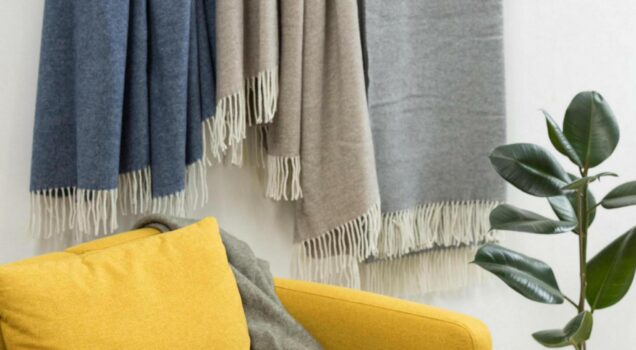

As the first cool evenings arrive, a throw naturally finds its place back in the home. On the sofa, at the foot of the bed or over an armchair, it becomes both a comfort accessory and a decorative element. But with so many materials, sizes, textures and levels of warmth, which throw should you choose for autumn and winter?
There is no single perfect model for everyone. The right choice depends above all on how you plan to use it: wrapping up in front of a film, adding an extra layer to the bed, warming up the look of a sofa or simply keeping a soft textile close at hand.
Start with the use: sofa, bed or armchair?
- Sofa: choose a size that is easy to handle but generous enough to cover legs or shoulders.
- Bed: a larger format creates a beautiful drape and can add an extra layer on cool nights.
- Armchair: a more compact throw is often enough.
- Decoration: colour, pattern and texture can take priority.
If you want to create a complete atmosphere, our guide to creating a cosy bedroom for autumn and winter shows how to combine throws, bed linen, cushions and lighting.
Which material should you choose for a warm throw?
Wool and cashmere for enveloping warmth
Animal fibres are appreciated when you want a warm but relatively light feel. The Carina throw 130 x 190, made from 90% merino wool and 10% cashmere, is a good example. It is ideal for relaxing moments, although it requires more delicate care.
Cotton for versatile comfort
Cotton is a great choice if you like natural, easy-to-live-with materials. The Gastounet throw combines cotton with decorative finishes that give it real visual presence.
Padded throws for a softer feel
The Cambra throw 140 x 200 combines a cotton cover with polyester filling, creating a fuller, softer feel that works especially well on cooler evenings.
Synthetic or recycled fibres
These can be a good option for a soft, light and easy-care throw. Texture and weight matter just as much as the fibre name on the label.
Which throw if you are always cold?
Do not look only at the word “throw”. Check the composition, thickness, possible filling, size and weight. A wool throw or a padded model will generally be better suited to regular winter use than a small decorative throw.
Which size should you choose?
- Around 130 x 160 cm: practical for an armchair or covering your legs.
- Around 130 x 180 cm: versatile for the sofa.
- Around 135 x 200 or 140 x 200 cm: more generous for wrapping up or using as a bed throw.
For the bed, also consider mattress width and the drape you want. Our bed linen size guide can help you visualise proportions.
Do you need a large throw for a sofa?
Not always, but a generous size is more comfortable if several people use it or if you like to wrap up completely. If your sofa already has several cushions, keep a balance between patterns and textures. See our guide to choosing and combining decorative cushions.
How to match a throw with your decor
A throw is one of the easiest ways to change a room with the seasons. On a light sofa, terracotta, caramel, deep green or midnight blue add warmth. On an already colourful sofa, a plain natural shade often creates better balance.
Can a throw replace a blanket?
For an evening on the sofa or as an extra layer on the bed, yes. But a throw does not always have the same dimensions or purpose as a traditional blanket. For occasional use or naps, a generous 140 x 200 cm format can be very practical.
How to choose a throw for the bed
On a bed, a throw adds both an extra layer and visual structure. The Elise knotted blanket 140 x 200, with its cotton cover and filling, works particularly well thanks to its generous size.
Which throw for a cosy living room?
Look for consistency between the throw, cushions and lighting. A strongly textured throw can become the focal point while simpler cushions balance the composition. Our guide to thermal or blackout curtains also helps create a more comfortable textile atmosphere around windows.
How to care for a throw in winter
A frequently used throw collects dust, hair and odours. Merino wool and cashmere need more care than machine-washable cotton, and some padded throws require a gentle cycle or air drying. Check the label before every wash and use our care-label guide if needed.
Mistakes to avoid
- Choosing only by colour.
- Buying a size that is too small.
- Confusing a light decorative throw with a truly enveloping one.
- Ignoring care instructions.
- Mixing too many patterns in the same room.
Our autumn-winter favourites
Here are four available models with different materials and uses.
-

Carina throw 130 x 190
From 129.00 € Select options This product has multiple variants. The options may be chosen on the product page -
Gastounet Throw
209.90 € Select options This product has multiple variants. The options may be chosen on the product page -
Elise knotted blanket 140 x 200
From 185.10 € Select options This product has multiple variants. The options may be chosen on the product page -
Cambra throw 140 x 200
169.90 € Select options This product has multiple variants. The options may be chosen on the product page
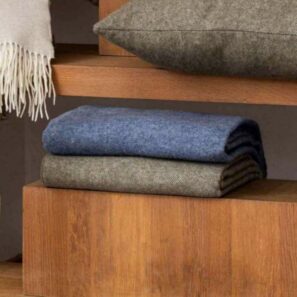


Browse our full selection of throws to compare materials, sizes and styles.
FAQ
Which throw is the warmest?
Wool, wool-cashmere blends and padded throws generally feel more enveloping. Size, thickness and construction also matter.
Which throw size for a sofa?
Around 130 x 180 cm is versatile. If you like to wrap up completely, a size close to 140 x 200 cm is more comfortable.
Can a throw be used as a bedspread?
Yes, provided the size is large enough for the drape you want.
Which material if you are always cold?
Wool and cashmere blends are good candidates, while padded models can also feel very warm and soft.
How do you keep a throw soft?
Follow the care label, use the right programme and avoid temperatures or drying methods that are not recommended.

Leave a Reply