


A plant like no other
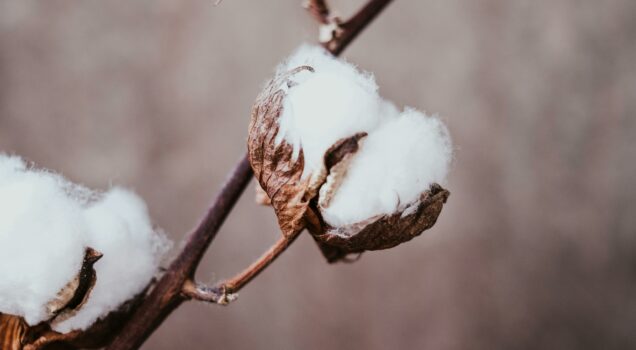
We come into contact with it every day, but few of us have ever seen it grow. Cotton grows on a shrub, the cotton plant, which produces pretty yellow or pink flowers, before transforming into bolls filled with white fibres: the famous “cotton wools”. They look like little clouds hanging from slender branches.
Grown for over 5,000 years, cotton has travelled from India to Egypt, from the Americas to West Africa. Even today, it remains one of the most widely used natural fibres in the world.
Depending on the country, harvesting is done by hand or by machine. In India, Turkey and Mali, hand-picking is sometimes still practised, an ancestral gesture that preserves the quality of the fibre. It’s a painstaking task, often carried out by families, where each capsule is carefully removed.
From field to wire
After harvesting, the long process of transformation begins. The raw cotton is cleaned to remove the seeds, then carded (combed) to align the fibres. It is then spun: the fibres are twisted into threads of varying fineness, ready for weaving or knitting.
This stage is crucial: depending on the quality of the yarn, the fabric will be softer, stronger or more breathable. But behind this production chain lie environmental and social issues. Conventional cotton, if badly grown, requires a lot of water and chemicals, and raises ethical questions about working conditions. That’s why it’s so important to understand what we’re buying, and to keep an eye on the labels.
Reading between the fibres: labels
Sometimes it’s hard to make sense of all the marketing promises. Fortunately, some labels help us to see things more clearly:
- Oeko-Tex Standard 100: guarantees that no harmful substances have been used in the manufacture of the fabric.
- GOTS (Global Organic Textile Standard): goes even further, with strict ecological and social criteria, from the field to the finished product.
- European Flax (for linen) and other local initiatives: promote cotton or textiles grown with less water, without GMOs, and in fair conditions.
See the Soline washed linen collection
It’s not always black and white, but every gesture counts, and every choice is a way of supporting production that is kinder to the planet.
What about cotton gauze?
Cotton gauze is the bohemian cousin of classic cotton. Originally used in medicine or for baby’s nappies, today it’s seductive for its lightness, its natural crumpled look and its incredible softness.
Technically, it’s an airy fabric, often made up of two or three very thin layers of cotton held together by a special weave. The result is a cloud-like effect, a lively texture and unrivalled comfort.
We love it as bed linen, curtains or throws… At home, gauze is especially popular in Anna’s bedroom, to create the airy cocoon she loves so much.
See the GAÏA cotton gauze collection
How do you recognise good cotton?
- The feel: it should be soft, without being rough or too slippery.
- The weave: the tighter the weave, the more resistant and pleasant the cotton.
- Density: a good quality cotton sheet keeps its shape and does not become deformed after a few washes.
- Labels: look for certifications (Oeko-Tex, GOTS) that guarantee healthy, sustainable cotton.
The art of cotton care (by Mamimosa)
- Washing: prefer 40°C for normal laundry, 60°C for whites or in case of allergies.
- Drying: if possible, in the open air to protect the fibres and the planet.
- Ironing: a lukewarm iron is all you need, but some people like to keep the side slightly crumpled, especially with linen or gauze.
- Mamimosa tip: “Add a little white vinegar to the washing machine, it keeps clothes soft and prevents detergent residue”.
And with us, cotton comes to life
At Anna et Moi, we chose cotton for one simple reason: it’s a fabric that breathes, that lives, that goes with you every day. Our bed linen, cushion covers, curtains… they’re all designed to give that soft, tactile feel and natural feel that we love so much.
Mamimosa often says: “A good cotton sheet is like a hug. It shouldn’t be scratchy or slippery. It has to be welcoming. And we take her word for it.
We wash our sets with care, let them air-dry whenever possible, and love that unique feeling when you slip into them after a long day.
Conclusion: from cotton to cocoon
Cotton is everywhere, but it’s far from ordinary. Behind each fibre is a story, a land, hands and know-how. By making a conscious choice, we’re taking a step towards a softer, more respectful, warmer interior.
Because you deserve it, let cotton transform your home into a real cocoon.

Leave a Reply