




Household linen care changes slightly in winter mainly because drying takes longer, windows stay closed more often and indoor humidity may escape less easily. Towels, bed linen, throws and other textiles can therefore remain damp for longer if we keep exactly the same habits as in summer.
The solution is not to wash everything hotter or use more detergent. To care for household linen properly in winter, the most useful habits remain simple: follow the care label, avoid overloading the washing machine, use an appropriate spin speed, let textiles dry completely and keep air moving around them.
Contents
- 1. Adjust washing habits without changing the basic rules
- 2. Avoid overloading the washing machine
- 3. Care for bath linen in winter
- 4. Look after bed linen
- 5. Dry laundry properly in cold weather
- 6. Control indoor humidity
- 7. Care for throws and thicker textiles
- 8. Store linen without damaging it
- 9. Mistakes to avoid
- 10. FAQ
1. Adjust washing habits without inventing new winter rules
The first rule never changes: read the care label. Winter does not change the maximum temperature a fabric can tolerate, nor the drying or spinning instructions.
There is therefore no reason to wash everything at a higher temperature simply because it is cold outside. Excess heat can tire fibres, affect colours or accelerate wear on some textiles.
Mamimosa always comes back to the same idea: choose the cycle according to the fabric, not according to the weather.
Sort by colour and fabric type
Sorting still matters. Separate very dark shades, pale colours and whites when necessary, and avoid mixing very delicate items with heavy or abrasive textiles.
A duvet cover, thick towels and a small delicate item do not move in the drum in the same way. Grouping compatible pieces helps preserve their appearance and allows more even washing.
Use a sensible amount of detergent
More detergent does not automatically mean cleaner linen. Overdosing can make rinsing more difficult and leave residue, especially when the drum is too full.
Follow the dosage instructions for your detergent and adjust according to load size, water hardness and how dirty the laundry actually is.
2. Avoid overloading the washing machine
This becomes even more important in winter because badly rinsed laundry packed tightly in the drum can also take longer to dry afterwards.
Duvet covers, sheets, towels and washable throws need enough space to circulate. When the drum is crammed full, washing and rinsing become less even.
Leave enough room for the textiles to move. For very bulky items, also check that your washing machine is designed to handle their wet weight.
Prevent large pieces from forming one heavy bundle
Large duvet covers can sometimes collect other items inside them during the wash. Where the product design allows it, fastening buttons or poppers can help reduce this effect.
The goal is simply to avoid ending up with one heavy bundle that rinses and spins unevenly.
3. Care for bath linen in winter
Towels are especially affected by slow winter drying. After a shower they hold a lot of water and may remain damp for hours in a bathroom with limited ventilation.
Hang them as widely as possible after use rather than leaving them bunched up or folded tightly on a hook. The more surface is exposed to the air, the more evenly they dry.
If you want to understand the link between thickness, comfort and drying time, see our guide Bath towel weight: which GSM should you choose?.
Do not overuse fabric softener
With towels, excessive fabric softener can gradually reduce the absorbency of some fibres. Follow the care instructions for both the textile and the product you use.
If softness is your priority, correct washing, good rinsing and complete drying are often just as important as adding extra products.
Everyday bath linen
Good care also starts with choosing a textile that matches how often you use and wash it.

4. Look after bed linen in winter
During winter we tend to spend more time under the duvet and add more textile layers. Bedrooms may also be aired less often, so bed linen deserves a little more attention.
Ventilate the bedroom regularly and allow the bed to breathe after the night. You do not have to put every throw, bedspread and decorative cushion back immediately after waking.
Do not confuse warmth with harsher washing
A warm flannel duvet cover does not need a hotter wash simply because it is an autumn or winter fabric. Cotton gauze and other materials should also be cared for according to their labels.
Fibre type and fabric construction determine care requirements, not the season.
For more on seasonal materials, see Which bed linen material should you choose for autumn and winter?.
Shake large items out before drying
After washing, gently shake sheets and duvet covers before hanging them. This opens up the fabric, can reduce deep creases and, most importantly, prevents large areas from remaining folded over while drying.
Bed linen and winter textiles
Cotton gauze, flannel and throws do not all need the same care. The label on each item remains the reference point.
-
Duvet Cover GAÏA Plain Cotton Gauze
From 43.10 € -

Duvet Cover Plain Flannel CANDICE
From 36.00 € -
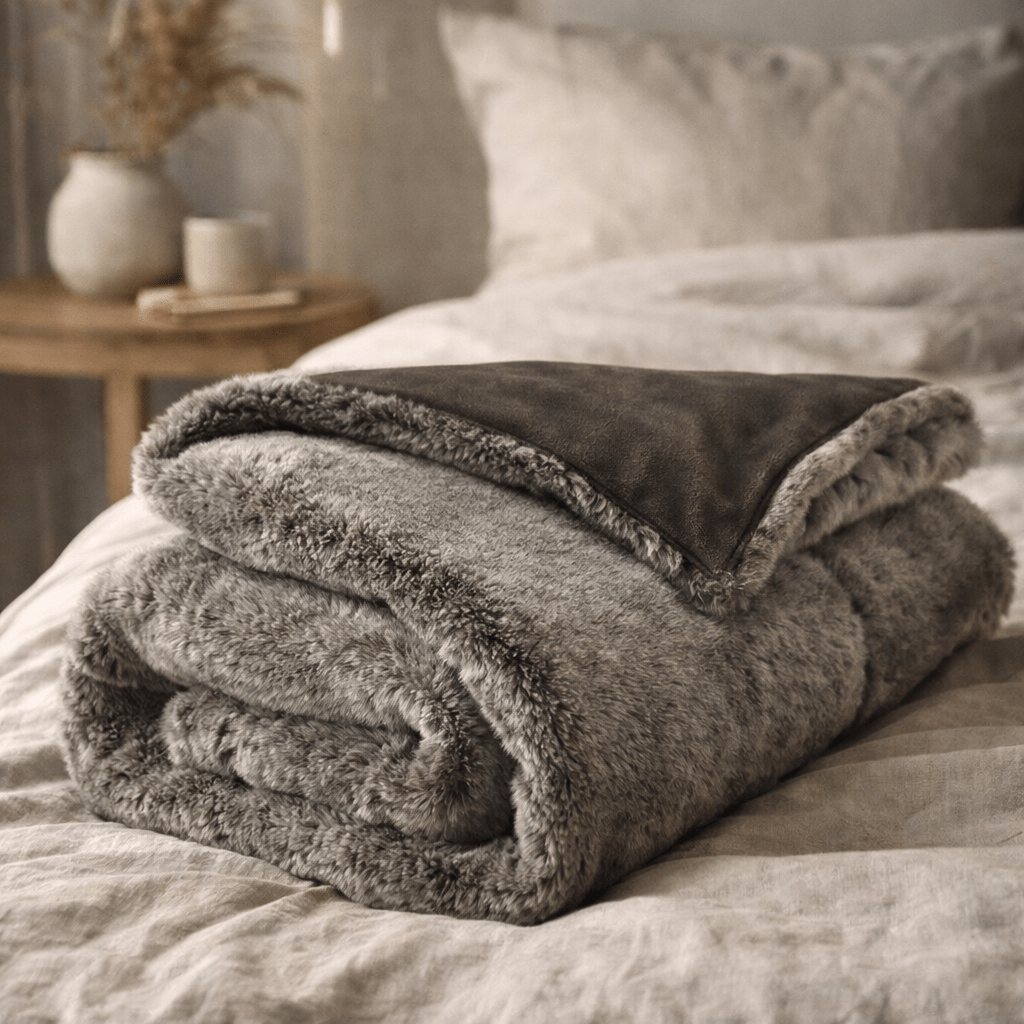
Kinta fleece-look throw 130 × 160 cm
79.90 €


5. Dry laundry properly in cold weather
Drying is probably the part of the routine that changes most between summer and winter. When outdoor air is cold, windows stay closed and laundry dries indoors, moisture can remain longer in both the fabric and the room.
Give every piece enough space on the drying rack
Avoid overlapping towels or packing household linen tightly together. Airflow between pieces helps moisture escape more efficiently.
For duvet covers and sheets, expose as much surface as possible instead of leaving them folded into several thick layers.
Use the right spin speed
If the care label allows a stronger spin, removing more water before drying can be useful in winter. But do not choose an aggressive spin for a textile that cannot tolerate it.
The right setting is the one suited to the fabric, not simply the highest number available.
Use the tumble dryer only when the care label allows it
A tumble dryer can be convenient in winter, but not every textile is suitable for it. Always check the drying symbol first.
There is also little benefit in continuing a hot cycle long after the laundry is dry. Repeated heat and mechanical action can contribute to fibre wear over time.
6. Control indoor humidity
Drying laundry indoors releases moisture into the air. That is not automatically a problem, but the moisture needs a way to leave the room.
Ventilate the drying space regularly, even in winter. A short effective airing period is often more useful than leaving wet textiles for hours in a completely closed room.
Can you dry laundry in a bedroom?
Occasionally, yes, but it is not ideal if ventilation is poor. Avoid drying large loads of wet laundry next to the bed in a closed room for long periods.
Our guide How to make a bedroom feel warmer in winter also explains why a cosy bedroom still needs fresh air and controlled humidity.
Never store textiles while they are still damp
A textile that feels almost dry is not necessarily ready for the cupboard. Wait until it is completely dry before folding and storing it.
This is particularly important for thick towels, throws and large duvet covers, where dampness can remain hidden in folded areas.
7. Care for throws and thicker textiles
Throws are often used much more in winter: on the sofa, bed, armchair or reading chair. They therefore collect dust, crumbs, hair or pet hair more quickly.
Not every throw should be washed at the same frequency or in the same way. Some can go in the machine, others require a special cycle or different treatment. Check composition and care instructions before deciding.
Treat a small stain early
When a small stain appears, dealing with it promptly may prevent the need to wash the entire throw straight away. Blot or treat the area according to the textile instructions instead of rubbing hard without knowing how the fibre will react.
Before using a stain remover, check that it is compatible with the fabric and colour.
Air between washes
If a throw is not stained, gently shaking it out and airing it may be enough between full washes. This can also avoid unnecessary cycles.
For more about sizing and use, see Throw or blanket: what is the difference and which should you choose?.
8. Store linen without damaging it
Before storing linen for several weeks or months, make sure it is clean and completely dry.
Fold it without compressing it excessively. Thick throws and strongly textured fabrics may lose some loft if they remain crushed for a very long time.
Choose a clean, dry storage space that is not exposed to persistent dampness.
Rotate frequently used linen
For bed and bath linen used regularly, a simple rotation prevents certain pieces from sitting forgotten at the back of a cupboard for months.
Store sets so you can see what you own. It also helps avoid buying unnecessary duplicates.
9. Common winter care mistakes
- Washing hotter simply because it is winter.
- Overloading the drum with large household textiles.
- Adding extra detergent because the load looks bulky.
- Leaving a damp towel bunched up after a shower.
- Drying a large load in a closed room without ventilation.
- Folding away a duvet cover or throw that is still slightly damp.
- Using the tumble dryer without checking the care label.
- Scrubbing a stain aggressively without considering the fabric.
- Compressing a thick throw for months in unsuitable storage.
10. A simple winter routine
- Before washing: sort the load, read labels and avoid overfilling the drum.
- After washing: shake out large pieces and open them up.
- While drying: leave space between textiles and renew the air.
- Before storage: make sure everything is fully dry.
- Every day: ventilate the bedroom, bathroom and frequently used textiles.
For most households, this routine is enough. Winter does not require a completely different way of caring for linen; it mainly requires more attention to drying and humidity.
Our advice at Anna & Moi
Mamimosa taught us that good linen lasts when you respect its rhythm: the right cycle, enough room in the washing machine, complete drying and no rushed storage.
In winter, the simplest habits make the biggest difference. A towel hung out properly, a duvet cover shaken before drying and a bedroom aired regularly are often more useful than washing more aggressively.
You may also like
- Bath towel weight: which GSM should you choose?
- Which bed linen material should you choose for autumn and winter?
- Throw or blanket: what is the difference and which should you choose?
- How to make a bedroom feel warmer in winter
11. How often should household linen be washed in winter?
Winter does not create one universal washing schedule. Frequency depends on use, contact with the skin, moisture and the type of textile. Bath towels used every day, pillowcases and sheets obviously need a different rhythm from a decorative throw that is used only occasionally.
Rather than washing more often simply because it is winter, look at the real signs: dampness, odour, stains and frequency of use. Unnecessary washing consumes water and energy and also exposes fibres to more mechanical action. The objective is clean linen without putting it through cycles that are not needed.
12. Should laundry be dried directly on a radiator?
Placing large wet textiles directly on a radiator is rarely the best solution. It can block heat from spreading into the room, concentrate moisture in one area and expose the fabric to intense local heat. The safest approach is to follow the textile’s drying instructions and allow air to circulate around it.
If you use a drying rack near a heat source, keep enough distance for air to move and never ignore the product’s care label. Gentle, complete drying is more important than trying to make the process as fast as possible.
FAQ: household linen care in winter
Why does laundry dry more slowly in winter?
Laundry is more often dried indoors and rooms may be ventilated less. Moisture then escapes more slowly. Leaving space between textiles and renewing the air helps.
Should I wash household linen hotter in winter?
No. Washing temperature depends on the fabric and its care label, not the season.
Can laundry be dried in a bedroom?
Occasionally, yes, provided the room is aired well. Avoid leaving a large amount of wet laundry to dry for hours in a completely closed bedroom.
How can I stop towels staying damp?
Hang them out as widely as possible after use, ventilate the bathroom and avoid leaving them bunched up or layered over one another.
Can every throw go in the washing machine?
No. Always check composition and care instructions. Some throws need a special programme or a different cleaning method.
When should a winter throw be stored away?
Only when it is clean and completely dry. Store it somewhere dry and avoid excessive compression for a long period.


Leave a Reply